The Boats!
For a few blissful months in 2024, I lived in Curcaçao, an island roughly 60km north of Venezuela. One of my favorite things to do there was to wander from where I lived in Otrobanda down across the Wilhelmina bridge over to Punda, the central area of the capital, Willemstad, and visit the floating market.
Most mornings, weather permitting, a number of small boats would come over from Venezuela, laden with some of the freshest and most amazing fruit and vegetables I’ve ever seen. Over the course of the day they’d sell their goods, and then head back to Venezuela, only to repeat this the next day.
It’s pretty hard to explain to people unfamiliar with life in the Caribbean how many small boats are going around all over the place. Between leisure, trade and travel; the cruises, the oil tankers, the service vessels and the yachts – there’s a lot going on. The small glimpses I’ve gotten during my time in Curaçao and other islands in the Caribbean have been enough to paint a picture which, in the last weeks and months has become pretty dark.
Of course there is some amount of narcotics trafficking in the Caribbean. Much as there is everywhere else. The veracity of the US government’s claims about fentanyl trafficking occurring through small boats in the Caribbean has been litigated elsewhere, and is highly doubtful at best. Similarly, the degree to which it is a clear war crime to direct military force towards unarmed civilian non-combatants, in an undeclared war, is extremely clear.

But what I think is missing from a lot of the discussion is a notion of what the boats actually are doing there. Because most people are unfamiliar with this part of the Caribbean, they see pictures of small boats, often with quite powerful outboard motors, and proceed to take this as evidence of malfeasance. So let me try to characterize the floating market for you.
The biggest of the boats are about 10 meters long, maybe 12, while the smallest can generously be described as skiffs. You haven’t lived until you’ve seen what is essentially a rowboat with an outboard motor piled high with watermelons. Heck, many of the smaller boats don’t even have motors – I assume they get pulled across by the bigger boats, but I’m not quite sure. The voyage across probably takes between 2-6 hours, depending on the boat. The men who come across likely leave home at daybreak to arrive early morning and set up shop.
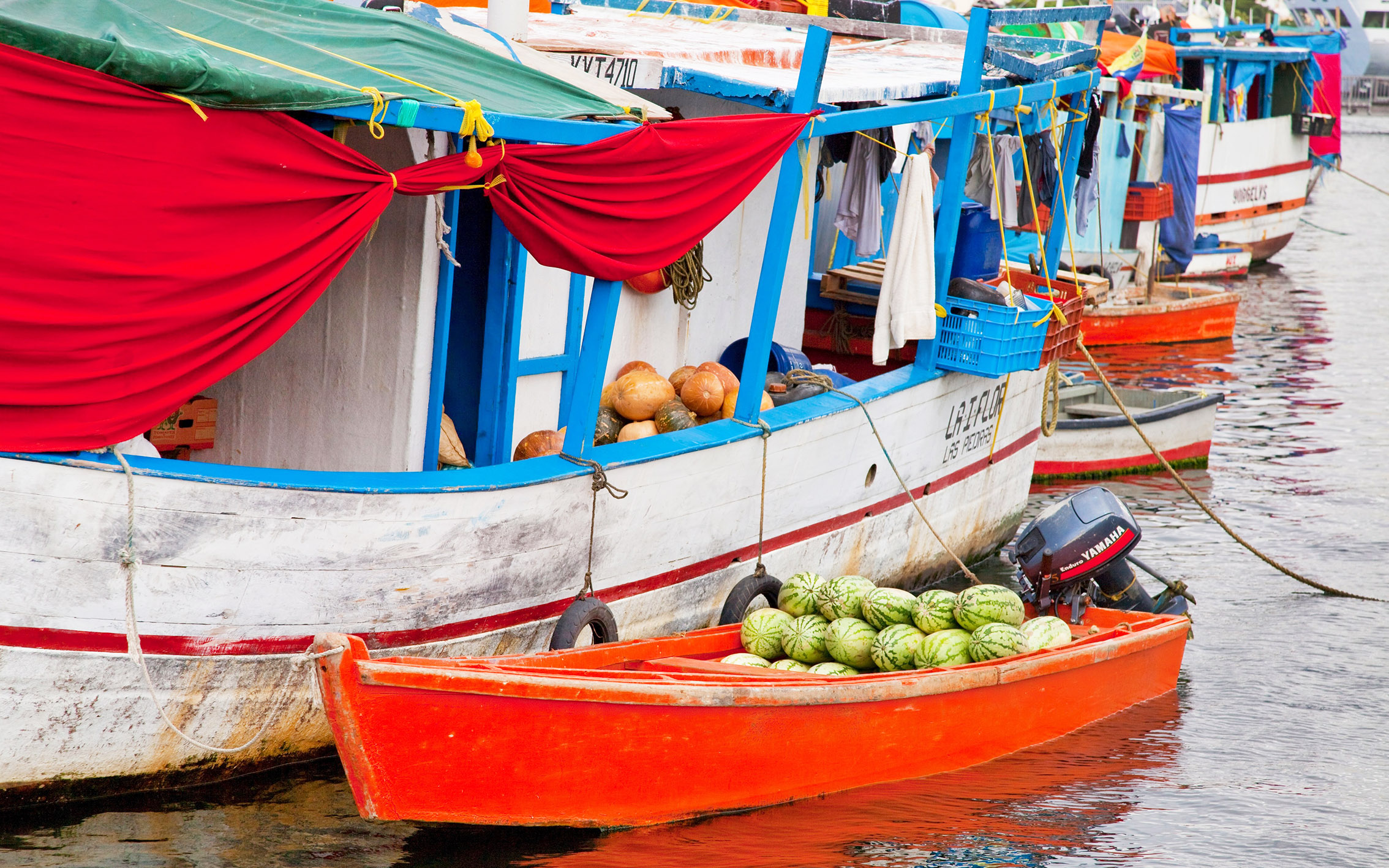
When I hear about the US military firing on boats in the Caribbean, I cannot help imagining that at least some of the boats are boats like these – entirely innocent vessels operated by traveling salesmen who brave the sea each day in the hopes of fetching a better price for their produce.
Can the pilot of a fighter jet recognize the difference between a butter avocado and a shipment of fentanyl from operational altitudes? I doubt it.